[Note from Michael J Pastor - the Stokes were related to the Hodges evidently, Abraham Hodge being the married uncle to William Boylan the original]
https://www.ancestry.ie/boards/surnames.stokes/1271.2/mb.ashx
Joseph Kinsey Stokes did have a son named Joseph H. Stokes, b. ca 1826, but
it was by his first wife, a Miss Binnicker/Binnacker. The information below
comes from "Henry Stokes of Colleton County, South Carolina - His Ancestry
and Descendants" The Stokes, Risher, Byrd, Hunter and Allied Families of
the South Carolina Low Country published by Joseph Jackson Stokes, M.D. in
1992 and reprinted in 1996.
Joseph H. Stokes was the only child of Joseph Kinsey Stokes and his first
wife, Miss Binnicker. He was born about 1828. He married Anna Rebecca
Bowen Hodges who was born in 1828, in Hodges, in present Greenwood County,
South Carolina. Anna Hodges was the daughter of George Washington Hodges
and Rebecca Douglass; George Washington Hodges was the son of John Hodges
and Frances Anderson. (Hodges information from "Greenwood County Sketches:
Old Roads and Early Families" by Margaret Watson, Attic Press, Greenwood,
South Carolina, 1982)
Anna Hodges Stokes died in 1858. The date of death of Joseph H. Stokes and
the place of burial of Joseph and Anna are not known. Joseph and Anna
Stokes had:
1. Laura Josephine Stokes, married George Thomas Reid of Chappelles, South
Carolina; they had four children. No other information available.
I don't know anything at all about Joseph Kinsey Stokes' first wife, Miss
Binnicker, but it is an old SC Low Country Surname. Some Binnicker
researchers may be able to help you determine who she was, or at least
narrow it for you.
I have more information on Joseph Kinsey Stokes' family thanks to the
wonderful documentation provided by several generations of Stokes
researchers. For more in-depth Stokes family information, you will find the
following invaluable:
1. The above described manuscript by Dr. Joseph Jackson Stokes.
2. "The Book of Stokes 1201-1903" by John Lemacks Stokes, Enquirer Print,
Yorkville, South Carolina, 1903.
3. "Stokes - 1,000 years" by William E. D. Stokes, Jr. published by the
author, Lenox, Massachusetts, 1958.
Some are difficult to find, but hopefully all are held in Charleston Special
Collections library. I was lucky enough to inherit them from my mother.
A summary of your Stokes heritage:
Joseph Kinsey Stokes died in the 1850's, his burial place is unknown. One
account of his death states that he was killed by robbers and his body
thrown into the Edisto River and was never recovered. The death date of his
second wife, Ann Raysor Stokes is not known. In some genealogies, her death
date is mistakenly taken from the death date of Ann Risher Stokes. Joseph
Kinsey Stokes had three full siblings; John, Henry Jr., and Anthony.
Anthony died before maturity. He also had a half-sister, Mary Stokes and
half brother Williams Stokes. His surviving siblings all married and had
families. Joseph Kinsey Stokes parents were Henry Stokes and his 3rd wife,
Mary Kinsey. He was born on the Henry Stokes Plantation in Warren Township,
Colleton District, which can be found on the 1825 Mills' Atlas map 2.25
miles east of the Barnwell District/Colleton District borderline. Henry
Stokes b. 1755 in Wilkes County, NC, died in Colleton District between 1811,
the year he married his fourth wife, Mary Cannon, and the date the 1820
federal census was taken. Henry came to Colleton in the early 1790's.
Henry's first wife was Mary Williams of Wilkes County, NC. Their two
children born in NC were Mary Stokes b. 1786 and Williams Stokes b. 1788.
Henry married again before leaving NC but the name of his 2nd wife isn't
known. Henry and his younger brother Peter b. 1774 came to Colleton County
together. Henry's plantation "At one time, some 18,000 acres which he
supposedly walked off in order to stake his claim to this property" William
Stokes Connor, a stokes descendent quoted in "Cemeteries of Upper Colleton
County, South Carolina". The property extended across Colleton and into
Barnwell District according to a Court of Equity Record in Barnwell dated
Oct. 15 1852, the division of the estate of George W. Rizer and his widow
Sarah Stokes Rizer, and his only child, William C. Rizer, included:
"Deceased owned 2014 acres of land in said district..." "Petitioner asks
that said estate be petitioned between her and infant son, William Rizer."
The second paragraph in the petition made it clear that the plantation was
"the lands of Mrs. Stokes estate on which Dr. Peter Stokes was the Admr."
Mrs. Stokes was great-great-grandmother, Ann Risher Stokes, Williams' widow
and Sarah Stokes Rizer's mother. In Colleton County, Henry and Peter's
plantations were in the Edisto community, the Green Pond section, Warren
Township. In Orange District, later Barnwell District, now Bamberg County,
Henry's plantation was in Fishpond township; Fishpond included Hunter's
Chapel community.
As for Mary Kinsey, nothing is known of her ancestry. She is not mentioned
in a detailed genealogy of the Kinsey (Kunzi, Kuenze, Kuntzli) family by
Irma Garris Weeks and Elizabeth Idella Goodwin. Natives of Germany, the
family escaped to Switzerland and then to England before coming to the
American colonies. The Kinsey genealogy (p. 59) states that on August 31,
1819, the State of SC granted 330 acres of land in St. George's Parish to
Williams Stokes - mistakenly listed as William - and Jesse Kinsey, but there
is no mention of a relationship between Jesse Kinsey and Mary Kinsey Stokes,
Williams Stokes' step-mother. The plantation was largely a timber operation
with some of the clear land planted for food, fiber for clothing and for
fodder. Canals, some still visible on Spell land, were dug across the
plantation to the Edisto River and the logs floated to the river and then to
coastal towns, and for many years thereafter, the occupation of Henry's sons
and grandsons was listed in federal censuses as lumber-getter, gatherer or
cutter. Henry's children were educated by tutors, some of whom lived with
the family and are said to be buried in unmarked graves in the Henry Stokes
Family Cemetery. Protestant since the Reformation, the Stokeses in the
colonies of VA and Carolinas were Anglicans until the introduction of
Methodism into the colonies. Henry and his family were devout Christians
who worshipped at the nearby Green Pond Chapel and Camp Ground, and after
1808, at the Green Pond Methodist Episcopal Church. Henry was a captain
in the county militia.
Henry Stokes was the son of William Stokes, the first child of David Stokes
and Sarah Montfort Stokes, born on Oct. 10, 1735 in Lunenburg County, VA.
Died about 1796 in Wilkes County, NC. He served in a Lunenburg County
militia unit as a lieutenant in the French and Indian War, 1756-1763, and
was a private in the American Revolutionary War as noted in the NC Rev. War
records for Wilkes County. According to family tradition, William was
married several times but the name of none of his wives is known; he also
had a large number of children but the names of only three are known: Henry
Stokes; Henry's half-brother, Peter Stokes; and Thomas Stokes.
David Stokes, the son of John Stokes, was born in Charles City County, VA on
Oct. 23 1707, died on Sep 12, 1794. He was a planter, a magistrate, 1739 to
1743, Charles City County; Justice of the Lunenburg County Court at its
founding and for several years thereafter; Vestryman and church warden for
35 years at the Old Reedy Creek Church, Cumberland Parish, and a colonel in
the Lunenburg County Militia. David married Sarah Montfort, b. near Old
Point Comfort, VA on Feb. 3 1717, died on Apr. 9 1800. She was the daughter
of Colonel Thomas Montfort.
John Stokes, the son of William Stokes, obtained a patent for 476 acres of
land in Charles City County in April 17001. The name of his wife is not
known.
William Stokes was the second son of Christopher Stokes III, was born about
1619; he inherited all of his father's land. William married a Miss Young.
Christopher Stokes III, the son of Christopher Stokes II and Alice Parker,
was in Virginia by 1622.
Christopher Stokes II, son of Christopher Stokes I, lord of Stanhawes Court
married first to Alice Parker, daughter of John Parker of Barnwood
Gloucestershire; married, second to Barbara Snell. Died in 1665.
Christopher Stokes I, lord of the manor of Stanhawes Court, Gloucestershire,
England, son of John Stokys (Stokes), lord of Stokes Haule of Seend, the son
of John Stokes (who built the chapel at Seend, died 1498), married Marjery
Nicholas, daughter of John Nicholas, of Rundwaie, Wiltshire, near Calne,
England. He died about 1566, married to Anne Leicester, of Christian
Malford, Wiltshire.
The above ancient Stokes information is in synopsis here, it is discussed in
detail in "The Book of Stokes".
Thursday, October 4, 2018

Montfort Stokes, governer of NC, uncle
https://www.genealogy.com/forum/surnames/topics/stokes/1303/
Re: NC Gov. Montfort STOKES, VA>NC>IT
By Pauline Mitchell Pierce May 06, 2000 at 07:29:28
In reply to: NC Gov. Montfort STOKES, VA>NC>IT
Jeanne Miller Bond 3/14/99
These are the siblings of Gov. Montfort Stokes. My husband descends from his sister Sarah Montfort Stokes who married Benjamin McCulloch.
Sarah Montfort's parents were Joseph Montfort, d. March 1776 in Warwick Co, Va & Lucy Holt. Lucy was the daughter of Thomas Holt.
Descendants of Sarah Montfort & David Stokes.
1 Sarah Montfort b: February 03, 1716/17 in Charles City Co, VA d: April 09, 1800 in Lunenburg, Co VA
.. +David Stokes b: October 23, 1707 in Cumberland Parish, Lunenburg, Co VA d: September 12, 1794 in Lunenburg, Co VA
......... 2 William Stokes b: October 10, 1735 in VA d: Abt. 1760 in Halifax Co., Va
............. +Sarah Wade
......... 2 Anne Stokes b: October 11, 1737 in Lunenburg Co, VA
............. +Capt. Robert Wade b: Abt. 1733 in Lunenburg Co, VA d: Abt. 1758 in Halifax Co., Va
......... 2 Elizabeth Stokes b: August 30, 1740 in VA
............. +??? Herring
......... 2 Mary Stokes b: August 20, 1743 in VA d: November 07, 1802 in Lunenburg, VA
............. +Anthony Waddy Street b: October 16, 1741 in New Kent Co? Va d: January 22, 1809 in Lunenburg Co, VA
......... 2 David Stokes b: November 18, 1745 in VA d: December 09, 1797 in Finnywood Creek,Mecklenburg Co, VA
............. +Elizabetth Marable b: Abt. 1748 in Lunenburg Co., Va
......... 2 Sarah Montfort Stokes b: December 19, 1748 in Lunenburg Co, VA d: September 12, 1799 in Chowan Co, NC
............. +Benjamin McCulloch b: Abt. 1740 in Halifax, Co. N.C. d: November 23, 1792 in Chowan Co, NC
......... 2 Jane Stokes b: March 24, 1750/51 in Lunenburg Co, VA d: October 1828 in Locust Grove Rudy Creek,Lunenburg Co, VA
............. +Peter Jones b: Abt. 1751 in Amelia County, Virginia d: January 24, 1815 in Lunenburg County, Virginia
......... 2 Susannah B. Stokes b: September 23, 1753 in Lunenburg Co,Va. d: Abt. 1784 in Salisbury, Rowan Co, NC
............. +Alexander Long b: January 16, 1758 in Rowan Co, NC d: October 23, 1824 in Rowan Co, NC
......... 2 John Stokes b: March 20, 1756 in Lunenburg Co, VA d: October 12, 1790 in Richmond Hill, Rowan Co., NC
............. +Elizabeth Pearson b: Abt. 1760 in Lunenburg Co, VA
......... 2 Peter Stokes b: October 25, 1758 in VA d: February 1828 in Lunenburg Co, VA
............. +Sarah "Sally" Smith b: May 24, 1765 d: July 02, 1827 in Lunenburg Co, Va
......... 2 Montfort Stokes b: March 12, 1762 in Lunenburg, Co, VA d: November 04, 1842 in Near Ft. Gibson, AR
............. +Mary Irvin b: Abt. 1764 in Edgecombe Co, NC?
......... *2nd Wife of Montfort Stokes:
............. +Rachel Montgomery b: Abt. 1766
Sarah Stokes McCulloch obituary findagrave
https://www.findagrave.com/memorial/132848102/sarah-mcculloch
Sarah Stokes McCulloch
BIRTH 1744
DEATH 1799 (aged 54–55)
USA
BURIAL Body lost or destroyed, Specifically: To date remains have not been documented
MEMORIAL ID 132848102 · View Source
Sarah Stokes McCulloch
BIRTH 1744
DEATH 1799 (aged 54–55)
USA
BURIAL Body lost or destroyed, Specifically: To date remains have not been documented
MEMORIAL ID 132848102 · View Source
Family Members
Spouse
Children
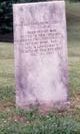

Elizabeth Stokes “Betsy” McCulloch Boylan findagrave obituary
https://www.findagrave.com/memorial/132848102/sarah-mcculloch
https://www.findagrave.com/memorial/132848102/sarah-mcculloch
Elizabeth Stokes “Betsy” McCulloch Boylan
BIRTH 1780
DEATH 25 Jan 1825 (aged 44–45)
BURIAL
City Cemetery
Raleigh, Wake County, North Carolina, USA
PLOT Section: E-1. Lot: 43
MEMORIAL ID 28032123 · View Source
Elizabeth Stokes McCulloch was born 1780 in Halifax County, the 6th of 7 known surviving children (3 boys/4 girls) born to Sen. Benjamin McCulloch and his wife, Sarah Montford Stokes.
Her father, Benjamin McCulloch, belonged to the Committee of Safety of Halifax in 1774; was elected to the Assembly in 1775, and to the Congress in 1776. After the close of the Revolutionary War he was repeatedly elected to one or the other branch of the Legislature.
She is descended from Scotch-Irish stock on her father's side, and was the paternal grandchild of Col. Alexander McCulloch (1715-1798) who immigrated to Halifax County from Dublin, Ireland with his father, Henry McCulloch, in the early 1700's and married Sarah Hill of Halifax Co. Her gr-grandfather, Henry McCulloch, was the son of James McCulloch of Grogan, Ireland, and his 1st wife. On her mother's side, she was the maternal grandchild of David Stokes & Sarah Montford of Lunenburg Co, VA; and niece to U.S. Judge, John Stokes and NC Governor Montfort Stokes.
Her gr-grandfather, Henry McCulloch, had a half-brother also named Henry McCulloch, who rose to prominence in NC prior to the Revolutionary War. They were both sons of James McCulloch of Grogan, Ireland. This James McCulloch married twice and had sons by both wives which he named Henry. The first Henry, from his 1st marriage, was Elizabeth's gr-grandfather. The 2nd Henry, sometimes referred to as "Henry, the Land Grabber", was a London Merchant and was the first of the McCullochs to immigrate to the New World, settling in NC. Described as a "typical adventurer" he speculated in land on an enormous scale acquiring millions of acres of land in Eastern North Carolina through royal grants. This Henry lost much of his land following the Revolutionary War as NC revoked his royal grants questioning his loyalty to the Patriot cause.
Her grandfather, Col. Alexander McCulloch, established "Elk Marsh" plantation in Halifax County. He served as an officer in the Orange County militia, and Clerk of Court in Bute Co. in 1772. Alexander represented Halifax in the lower house of Assembly in 1760, and served on the Royal Council between 1762 and 1775. Apparently of divided sentiments during the Revolutionary War, he sat out the conflict at Elk Marsh. He prospered in the New World, owning at his death 70 slaves and plantations in Halifax and Warren Counties.
Betsy was 21 years old when she married 24-year old William Montford Boylan of New Jersey. The couple were married in Pluckemin, Somerset County, NJ on November 4, 1801, while Betsy was visiting relatives in his home town. The couple soon returned to North Carolina, settling in the capital city, Raleigh, where William became a wealthy planter and editor of the weekly newspaper, the Raleigh Minerva.
Over the next 21 years, Betsy would deliver 11 children into the household: John Hodge Boylan (1803-1870), Alexander McCulloch Boylan (1804-1834), William Boylan II (1806-1828), Benjamin McCulloch Boylan (1808-1809), Eleanor Eliza Boylan (1810-1849), Samuel McCulloch Boylan (1812-1845), Mary Adelaide Boylan (1814-1824), James Boylan (1816-1842), Catherine Boylan (1818-1895), Sarah Boylan (1820-1821), and William Montford Boylan Jr. (1822-1899).
In 1818, William Boylan Sr. purchased "Wakefield" the plantation once belonging to Raleigh founder, Joel Lane (built ca. 1795). The Lane "Wakefield" house, along with "Montfort Hall", which Boylan Jr. build in 1858, remained in the Boylan family until 1909.
In the late 1760s, planter Joel Lane (c. 1740-1795) built a story-and-a-half house at Bloomsbury, a crossroads hamlet of colonial Johnston County. He named the property Wakefield in honor of Margaret Wake, wife of colonial Governor William Tryon. Lane and his house subsequently played a central role in North Carolina's transition from colony to state and in the establishment of Raleigh as the state capital. Wakefield stood on a small hill, near the main trail through the area. Lane's surrounding land holdings numbered in the thousands of acres, a status that naturally drew him into politics. After Lane's death in 1795, Wakefield served several owners before being purchased by planter William Boylan in 1818.
Elizabeth "Betsy" Boylan died an untimely death in 1825, passing at age 45 from lung disease. Her husband of 24 years would later marry Jane Elliot in 1830, the daughter of a wealthy plantation owner in Cumberland Co, NC, by whom one known daughter was born.
As for her children, many of them died young and are buried here. Only her youngest son, William Montford Boyland Jr, married and had children. Her eldest son, John Hodge Boylan, is reportedly the father of Adelaid Boylan (1832-1909), who is buried here at City Cemetery, but no information has been found by this researcher indicating he ever married.
https://www.findagrave.com/memorial/132848102/sarah-mcculloch
Elizabeth Stokes “Betsy” McCulloch Boylan
BIRTH 1780
DEATH 25 Jan 1825 (aged 44–45)
BURIAL
City Cemetery
Raleigh, Wake County, North Carolina, USA
PLOT Section: E-1. Lot: 43
MEMORIAL ID 28032123 · View Source
Elizabeth Stokes McCulloch was born 1780 in Halifax County, the 6th of 7 known surviving children (3 boys/4 girls) born to Sen. Benjamin McCulloch and his wife, Sarah Montford Stokes.
Her father, Benjamin McCulloch, belonged to the Committee of Safety of Halifax in 1774; was elected to the Assembly in 1775, and to the Congress in 1776. After the close of the Revolutionary War he was repeatedly elected to one or the other branch of the Legislature.
She is descended from Scotch-Irish stock on her father's side, and was the paternal grandchild of Col. Alexander McCulloch (1715-1798) who immigrated to Halifax County from Dublin, Ireland with his father, Henry McCulloch, in the early 1700's and married Sarah Hill of Halifax Co. Her gr-grandfather, Henry McCulloch, was the son of James McCulloch of Grogan, Ireland, and his 1st wife. On her mother's side, she was the maternal grandchild of David Stokes & Sarah Montford of Lunenburg Co, VA; and niece to U.S. Judge, John Stokes and NC Governor Montfort Stokes.
Her gr-grandfather, Henry McCulloch, had a half-brother also named Henry McCulloch, who rose to prominence in NC prior to the Revolutionary War. They were both sons of James McCulloch of Grogan, Ireland. This James McCulloch married twice and had sons by both wives which he named Henry. The first Henry, from his 1st marriage, was Elizabeth's gr-grandfather. The 2nd Henry, sometimes referred to as "Henry, the Land Grabber", was a London Merchant and was the first of the McCullochs to immigrate to the New World, settling in NC. Described as a "typical adventurer" he speculated in land on an enormous scale acquiring millions of acres of land in Eastern North Carolina through royal grants. This Henry lost much of his land following the Revolutionary War as NC revoked his royal grants questioning his loyalty to the Patriot cause.
Her grandfather, Col. Alexander McCulloch, established "Elk Marsh" plantation in Halifax County. He served as an officer in the Orange County militia, and Clerk of Court in Bute Co. in 1772. Alexander represented Halifax in the lower house of Assembly in 1760, and served on the Royal Council between 1762 and 1775. Apparently of divided sentiments during the Revolutionary War, he sat out the conflict at Elk Marsh. He prospered in the New World, owning at his death 70 slaves and plantations in Halifax and Warren Counties.
Betsy was 21 years old when she married 24-year old William Montford Boylan of New Jersey. The couple were married in Pluckemin, Somerset County, NJ on November 4, 1801, while Betsy was visiting relatives in his home town. The couple soon returned to North Carolina, settling in the capital city, Raleigh, where William became a wealthy planter and editor of the weekly newspaper, the Raleigh Minerva.
Over the next 21 years, Betsy would deliver 11 children into the household: John Hodge Boylan (1803-1870), Alexander McCulloch Boylan (1804-1834), William Boylan II (1806-1828), Benjamin McCulloch Boylan (1808-1809), Eleanor Eliza Boylan (1810-1849), Samuel McCulloch Boylan (1812-1845), Mary Adelaide Boylan (1814-1824), James Boylan (1816-1842), Catherine Boylan (1818-1895), Sarah Boylan (1820-1821), and William Montford Boylan Jr. (1822-1899).
In 1818, William Boylan Sr. purchased "Wakefield" the plantation once belonging to Raleigh founder, Joel Lane (built ca. 1795). The Lane "Wakefield" house, along with "Montfort Hall", which Boylan Jr. build in 1858, remained in the Boylan family until 1909.
In the late 1760s, planter Joel Lane (c. 1740-1795) built a story-and-a-half house at Bloomsbury, a crossroads hamlet of colonial Johnston County. He named the property Wakefield in honor of Margaret Wake, wife of colonial Governor William Tryon. Lane and his house subsequently played a central role in North Carolina's transition from colony to state and in the establishment of Raleigh as the state capital. Wakefield stood on a small hill, near the main trail through the area. Lane's surrounding land holdings numbered in the thousands of acres, a status that naturally drew him into politics. After Lane's death in 1795, Wakefield served several owners before being purchased by planter William Boylan in 1818.
Elizabeth "Betsy" Boylan died an untimely death in 1825, passing at age 45 from lung disease. Her husband of 24 years would later marry Jane Elliot in 1830, the daughter of a wealthy plantation owner in Cumberland Co, NC, by whom one known daughter was born.
As for her children, many of them died young and are buried here. Only her youngest son, William Montford Boyland Jr, married and had children. Her eldest son, John Hodge Boylan, is reportedly the father of Adelaid Boylan (1832-1909), who is buried here at City Cemetery, but no information has been found by this researcher indicating he ever married.
william montfort boylan jr obituary findagrave family members
Family Members
Parents

Spouse

Siblings




Children


william montford boylan jr findagrave obituary
https://www.findagrave.com/memorial/28032055/william-montford-boylan
William Montford Boylan, Jr
BIRTH 5 Sep 1822
DEATH 3 Feb 1899 (aged 76)
BURIAL
City Cemetery
Raleigh, Wake County, North Carolina, USA
MEMORIAL ID 28032055 ·
William Montfort Boylan born 1822 in Raleigh, Wake County, the youngest of 11 known surviving children (7 boys/4 girls) born to wealthy planter & newspaperman, William Montford Boylan Sr. and Elizabeth Stokes McCullouch. William Boylan Sr. was born in Pluckemin, Somerset Co, NJ came to Raleigh in 1799 where he became one of the wealthiest landowners, newspaper editors, and businessman in the state.
He was the paternal grandson of Capt. John Boylan & Eleanor Hodge of NJ; and gr-grandson of this family's patriarch, Aaron Boylan (c. 1710-1751) who immigrated to Basking Ridge, Somerset Co, NC from Colerain, Ireland ca. 1732. On his mother's side, he was the maternal grandson of Sen. Benjamin Samuel "Sandy" McCulloch & Sarah Montford Stokes of Halifax & Craven Counties, NC.
In 1846, the 24-year old married 19-year old Mary Kinsey, the niece and adopted daughter of Rev. and Mrs. Richard Sharp Mason of Raleigh. The couple would become parents of 4 known children: Elizabeth "Betsy" McCulloch Boylan (1847-1921), Mary Alice Boylan (1850-1890), William Boylan III (1852-1915), and James Boylan (c. 1854-aft 1870).
In 1858, William Jr. hired architect William Percival to design his residence and lasting legacy, "Montford Hall" (photo shown here).
Percival was a noted architect, reportedly a retired British army officer, who resided in Raleigh for two years. During that short time he received commissions for renovations to the Capitol, the First Baptist Church and two other Italianate brick mansions (neither survives). Percival's other notable North Carolina commissions include New East and New West dormitories at the University of North Carolina in Chapel Hill, and Calvary Episcopal Church, The Barracks house, and the Coates House, (private residences) all located in Tarboro.
William's father died in 1861, and the 39-year old only inherited a relatively small portion of the estate, apparently an indication of his father's disdain for his youngest son's lifestyle and and lack of ambition and social consciousness. William Jr. received $10,000.00 cash, the Crabtree Plantation in Wake County, and a tract of land in Mississippi. This was due to great differences in the characters of the two men. The elder Boylan, was very political and public-minded. His son, William Montfort Boylan, was much more of a bon vivant who enjoyed drinking and fox hunting. One really telling indication of the low esteem that William Boylan held for his son was that he did not bequeath to his son his home and library which were less than a quarter of a mile away from Montfort Hall.
In comparison to his father, William Montfort Boylan was fairly apolitical; he only supported the Confederacy after secession had occurred. As a result of his ambivalence in the Civil War, he and his home were spared during the Union occupation of Raleigh, although the grounds of his home were used as a camp by Union troops.
William Montfort Boylan suffered pretty heavy financial losses during the Civil war, but by the 1870's, a decade later, his fortune had reversed by a large degree. His then minor children inherited funds from his brother, John H. Boylan in 1870; and his sister, Catherine Boylan, gave him ninety-two acres of the Wakefield plantation in 1875.
William Montfort Boylan, Jr. died in 1899, at age 77. Ironically, he did not die at his beloved home, "Montfort Hall", but instead died of a stroke at Johns Hopkins Hospital in Baltimore after having a wart removed from his nose.
Upon his death he left "Montfort Hall" and the surrounding land to his wife, Mary K. Boylan. His widow died just 2 years later in 1902, and his property was bequeathed to his four children: Betsy Snow, Mary A. Haywood, William Boylan, and James Boylan.
In 1907, the land around "Montfort Hall" was sold and subdivided as Boylan Heights, one of the city's first planned suburban neighborhoods. "Montfort Hall" subsequently passed through a succession of owners. Despite the addition of a wrap-around porch and frame additions early in the 20th century, the building retained much of its original character. New owners in the 1980s returned the exterior of the building to its original appearance.
"Montfort Hall", a Raleigh Historic Landmark, is located at 308 South Boylan Ave. in the Boylan Heights Historic District (it is also listed individually in the National Register as Montford (sic.) Hall). It is a private residence and is not open to the public.
William Montford Boylan, Jr
BIRTH 5 Sep 1822
DEATH 3 Feb 1899 (aged 76)
BURIAL
City Cemetery
Raleigh, Wake County, North Carolina, USA
MEMORIAL ID 28032055 ·
William Montfort Boylan born 1822 in Raleigh, Wake County, the youngest of 11 known surviving children (7 boys/4 girls) born to wealthy planter & newspaperman, William Montford Boylan Sr. and Elizabeth Stokes McCullouch. William Boylan Sr. was born in Pluckemin, Somerset Co, NJ came to Raleigh in 1799 where he became one of the wealthiest landowners, newspaper editors, and businessman in the state.
He was the paternal grandson of Capt. John Boylan & Eleanor Hodge of NJ; and gr-grandson of this family's patriarch, Aaron Boylan (c. 1710-1751) who immigrated to Basking Ridge, Somerset Co, NC from Colerain, Ireland ca. 1732. On his mother's side, he was the maternal grandson of Sen. Benjamin Samuel "Sandy" McCulloch & Sarah Montford Stokes of Halifax & Craven Counties, NC.
In 1846, the 24-year old married 19-year old Mary Kinsey, the niece and adopted daughter of Rev. and Mrs. Richard Sharp Mason of Raleigh. The couple would become parents of 4 known children: Elizabeth "Betsy" McCulloch Boylan (1847-1921), Mary Alice Boylan (1850-1890), William Boylan III (1852-1915), and James Boylan (c. 1854-aft 1870).
In 1858, William Jr. hired architect William Percival to design his residence and lasting legacy, "Montford Hall" (photo shown here).
Percival was a noted architect, reportedly a retired British army officer, who resided in Raleigh for two years. During that short time he received commissions for renovations to the Capitol, the First Baptist Church and two other Italianate brick mansions (neither survives). Percival's other notable North Carolina commissions include New East and New West dormitories at the University of North Carolina in Chapel Hill, and Calvary Episcopal Church, The Barracks house, and the Coates House, (private residences) all located in Tarboro.
William's father died in 1861, and the 39-year old only inherited a relatively small portion of the estate, apparently an indication of his father's disdain for his youngest son's lifestyle and and lack of ambition and social consciousness. William Jr. received $10,000.00 cash, the Crabtree Plantation in Wake County, and a tract of land in Mississippi. This was due to great differences in the characters of the two men. The elder Boylan, was very political and public-minded. His son, William Montfort Boylan, was much more of a bon vivant who enjoyed drinking and fox hunting. One really telling indication of the low esteem that William Boylan held for his son was that he did not bequeath to his son his home and library which were less than a quarter of a mile away from Montfort Hall.
In comparison to his father, William Montfort Boylan was fairly apolitical; he only supported the Confederacy after secession had occurred. As a result of his ambivalence in the Civil War, he and his home were spared during the Union occupation of Raleigh, although the grounds of his home were used as a camp by Union troops.
William Montfort Boylan suffered pretty heavy financial losses during the Civil war, but by the 1870's, a decade later, his fortune had reversed by a large degree. His then minor children inherited funds from his brother, John H. Boylan in 1870; and his sister, Catherine Boylan, gave him ninety-two acres of the Wakefield plantation in 1875.
William Montfort Boylan, Jr. died in 1899, at age 77. Ironically, he did not die at his beloved home, "Montfort Hall", but instead died of a stroke at Johns Hopkins Hospital in Baltimore after having a wart removed from his nose.
Upon his death he left "Montfort Hall" and the surrounding land to his wife, Mary K. Boylan. His widow died just 2 years later in 1902, and his property was bequeathed to his four children: Betsy Snow, Mary A. Haywood, William Boylan, and James Boylan.
In 1907, the land around "Montfort Hall" was sold and subdivided as Boylan Heights, one of the city's first planned suburban neighborhoods. "Montfort Hall" subsequently passed through a succession of owners. Despite the addition of a wrap-around porch and frame additions early in the 20th century, the building retained much of its original character. New owners in the 1980s returned the exterior of the building to its original appearance.
"Montfort Hall", a Raleigh Historic Landmark, is located at 308 South Boylan Ave. in the Boylan Heights Historic District (it is also listed individually in the National Register as Montford (sic.) Hall). It is a private residence and is not open to the public.
Saturday, September 29, 2018
William Boylan- Old North State biography - done
BIOGRAPHICAL HISTORY
OF NORTH CAROLINA
"OLD NORTH STATE" EDITION
https://ia800208.us.archive.org/19/items/cu31924092215486/cu31924092215486.pdf
WILLIAM BOYLAN
''NE of the early journalists of Raleigh was
William Boylan, editor of the Minerva, and a
man of State-wide prominence. This gentleman
was born in Somerset County, New Jersey, on
September i, 1777. He was a son of John Boylan,
and the maiden name of his mother was
Eleanor Hodge. Young Boylan came to North Carolina to work
in the office of his uncle, Abraham Hodge, one of the State's
early printers. Mr. Hodge first engaged in business in North
Carolina about the beginning of January, 1785, the firm being
Hodge & Blanchard, publishers of the State Gazette of North
Carolina, at New-Bern. Shortly thereafter Henry Wills succeeded
Mr. Blanchard, and the firm became Hodge & Wills.
Judge Iredell prevailed on Hodge & Wills to remove to Edenton
about the year 1787. The firm afterward removed from Edenton
to Halifax, and in the latter town began publishing the North
Carolina Journal, in July, 1793. It was in 1797, when he was
but twenty years old, that William Boylan (subject of this sketch)
became a member of the firm of Hodge & Boylan, publishers at
Fayetteville of the North Carolina Minerva and Fayetteville
Gazette. The paper last named was later removed to the State
capital. In its new location it was first called the North Carolina
Minerva and Raleigh Advertiser, and afterward simply The
Minerva The facts above enumerated are taken from a work by Doctor
Stephen B. Weeks entitled "The Press of North Carolina in the
Eighteenth Century," which also contains a sketch of the life
of Mr. Hodge.
It was about 1799 that Mr. Boylan became a citizen of Raleigh.
In addition to his newspaper business, he had a bookstore, and
also became president of the State Bank, succeeding Colonel
William Polk. Both Boylan and Polk were Federalists of the
deepest dye, and strong friends.
For many years Hodge & Boylan were printers to the State,
and held that position as long as their party remained in power.
By the laws of 1801, the Raleigh Academy was incorporated,
and Mr. Boylan was one of its Board of Trustees. His associates
on that board were John Craven, William White, Sherwood Haywood,
Theophilus Hunter, John Ingles, Nathaniel Jones of White
Plains, Matthew McCullers, William Hinton, Simon Turner,
Samuel High, Joseph Gales, John Marshall, and Henry Seawell.
In this famous school were afterward educated many eminent
men, including William Rufus King, Vice-President of the United
States; Leonidas Polk, the bishop and Confederate general;
James Iver MacKay, of Bladen, chairman of the Committee of
Ways and Means in 1845 ; and others who attained distinction in
public life.
When the publication of the Minerva began in Raleigh, its rival
paper was the Raleigh Register, edited by Joseph Gales. Boylan
and Gales, being political opponents, were often not on good
terms personally, and their differences culminated in a personal
attack on -Gales by Mr. Boylan in December, 1908. For the
injuries he received on this occasion Mr. Gales instituted a civil
suit and recovered £100, which he donated to the Raleigh Academy.
When political animosities had somewhat cooled, better
relations existed between these gentlemen, and their descendants
grew up as friends and neighbors, so remaining at the present time.
When the old capitol at Raleigh was burned on June 21, 1831,
and it had been decided to erect a new building, Mr. Boylan was
appointed one of the commissioners to cause the erection of the present edifice. The sum of $50,000 was appropriated to cover
the cost of building. The commissioners thought this amount was
a good enough start, so invested the whole sum in a foundation.
Then they put up a building more in keeping with the dignity of
North Carolina, and it cost the State $530,000. It was for many
years regarded as the finest public building in America.
In the course of time Mr. Boylan's business ventures brought
him a handsome fortune, and he retired from editorial work. He
gave his newspaper outfit to his brother, Abraham Hodge Boylan,
who soon disposed of it.
Long after he had retired from newspaper work it was a custom
with William Boylan to visit the printing offices in Raleigh and
chat with the compositors. Having been a practical printer in
his younger days, he was always interested in the welfare of the
craft. Mr. Boylan was owner of plantations in North Carolina
and Mississippi, and also held much property in slaves, which
latter was, of course, swept away by the war.
In his Tucker Hall address at Raleigh, August 24, 1867, ex-
Governor Swain tells the following anecdote of our subject
:
"The late William Boylan, the first editor of the Raleigh Minerva, and the
immediate successor of Colonel Polk as president of the State Bank, was
a gentleman sedate and grave in a manner to a degree that to a stranger
might have been taken for austerity. Traveling from Raleigh to Pittsboro
about 1800, he and Mr. Peace, on reaching the election ground at Brassfields,
found a multitude assembled engaged in dancing and other rural
sports in the free and easy manner characteristic of the time and place.
Mr. Peace was comparatively at home. Mr. Boylan stood aloof until a
rowdy approached and invited him to enter the ring with the dancers. On
his declining, a dozen came forward prepared to coerce the submission of
the proud aristocrat. In an instant Mr. Peace, with great solemnity, beckoned
the leader of the band aside and whispered : 'My friend, be careful
how you act. Bless your life, that is Mr. Boylan, the man who made the
almanac, and can foretell eclipses and thunderstorms.' The reference to
the almanac-maker secured at once the most deferential respect for the distinguished
visitor."
Prior to the invention of the cotton-gin very little cotton was
raised in North Carolina, or, in fact, anywhere else. About the time of his removal to Wake County, when the new mechanical
invention was taking shape, Mr. Boylan began planting cotton,
and prevailed on his neighbors to do likewise. This was. the first
ever raised in Wake County^ Even before he came to Raleigh,
Mr. Boylan had done some experimental work as a raiser of this
staple.
In addfition to his private interests, Mr. Boylan was a man
deeply interested in industries affecting the general pubHc, and
strongly advocated public improvements. At the session of 1848
the act of Assembly was passed incorporating the North Carolina
Railroad Company, the State making a subscription of $2,000,000,
conditioned upon $1,000,000 being subscribed by individuals.
The friends of the work addressed themselves zealously to the
task of raising this $1,000,000 of private stock, but at first failed
to accomplish it. Eventually Governor Morehead, Mr. Boylan,
Mr. Calvin Graves, and some others made an extensive canvass
of the State in the interest of the work, and still quite a large
amount of stock remained to be taken. In this emergency
Mr. Boylan joined with others and subscribed for the remaining
shares, and thus secured the State aid. The efforts of Mr. Boylan
and his associates in this matter deserve to be held in grateful
remembrance by all who realize the great benefit the construction
of this important railroad has been to the people of the State. He
set an example of patriotism that is worthy of emulation.
Mr. Boylan was twice married : first, to Elizabeth McCuUoch
;
second, to Jane Elliott. His first wife was a daughter of Benjamin
McCulloch, of Halifax, and a granddaughter of the Honorable
Alexander McCulloch, member of the King's Council of North
Carolina in colonial days. Mr. Boylan left a large family, but
the only descendants who bear his surname are a son and the
grandchildren of the late William Montfort Boylan, of Raleigh,
who was one of the sons of his father's first wife, Elizabeth
McCulloch. William Montfort Boylan left two sons, William
and James, the latter now deceased; and two daughters,
Mrs. George H. Snow and Mrs. Joseph A. Haywood, the last
named being dead also.
William Boylan, our present subject, died in his eighty-fourth
year at Raleigh, on July 15, 1861. His remains were interred
in his family plot in the Old City Cemetery. On the monument
which marks his resting place we find the following epitaph
:
"He removed in his early youth to North Carolina, where he resided
until his death, beloved and respected by all. He was a patriotic and
public-spirited man, and ardently devoted to the interests and improvement
of his adopted State."
Marshall DeLancey Haywood.
Subscribe to:
Posts (Atom)